Xylophone Redwork: A Designer’s Honest Review for Real Embroidery Projects
First Impressions: A Playful Yet Polished Design
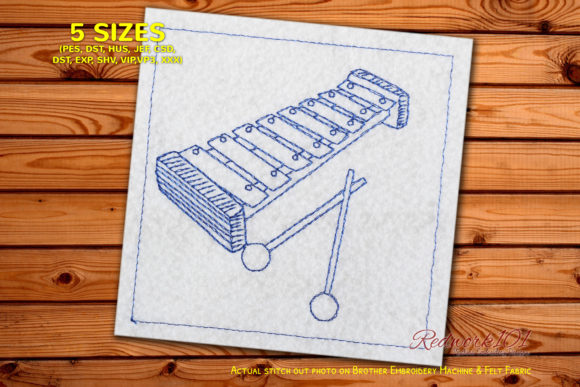
Opening the embroidery file for Xylophone Redwork, I immediately noticed the balance between simplicity and charm. The design feels playful without being childish, making it a versatile option for a variety of music-themed projects. The redwork style gives it that clean, hand-embroidered look without the time commitment, which is a major plus for small business owners and Etsy sellers looking to scale their handmade offerings.
Design Breakdown: What You’re Actually Getting
The main xylophone illustration is clean and well-structured. The optional box stitch framing the design is a nice touch, though it’s clearly meant to be customized. The outer box color is typically different from the main design, which allows for creative color choices depending on the project. That said, if the box is not integral to the visual, it’s best to skip it for smaller hoop sizes or simpler looks.
Real-Life Use: Custom Tote Bags and Baby Clothes
I tested Xylophone Redwork on a cotton tote bag and a baby onesie. Both turned out well, with clear stitch definition and minimal distortion. On the tote, the design added a subtle musical accent without overwhelming the fabric. On the baby onesie, it read as a thoughtful, personalized gift—perfect for parents who love music or for a themed nursery.
Performance Across Common Embroidery Projects
- Custom Apparel: Works well on lightweight sweatshirts and t-shirts. Just be mindful of stitch density around the xylophone keys, especially on stretchy fabrics.
- Embroidered Patches: The clean lines make this design a good candidate for patches. It holds up well when ironed onto jackets or sewn onto bags.
- Holiday Gifts: A quick stitch-out on a tea towel or pillow cover gives a festive, handmade touch.
- Boutique Merchandise: The design’s simplicity makes it easy to pair with other music-themed elements, helping small shop owners create cohesive product lines.
Where to Use It Carefully
While Xylophone Redwork performs well in most cases, there are a few situations where caution is needed:
- Small hoop sizes: The xylophone has some fine details, especially in the keys and frame. If your hoop is tight, you may lose clarity.
- Dark fabrics: The red thread may not pop as much unless you test with contrasting thread colors.
- Curved surfaces like caps: The rectangular box frame may not fit well on curved areas. Consider removing or resizing it for better placement.
- Textured or stretchy fabrics: These can distort the design’s crisp lines. Always use proper stabilizer and test first.
Visual Impact and Customer Appeal
From a visual standpoint, this design brings a sense of whimsy and warmth. It’s not overly complex, which makes it accessible to a broad audience. For Etsy sellers and craft entrepreneurs, that’s a big win—designs that are easy to stitch and universally appealing tend to convert better.
When used on a finished product like a baby blanket or boutique tote, Xylophone Redwork elevates the item from generic to thoughtful. It subtly communicates attention to detail and care in the handmade process, which builds customer trust and brand consistency.
Stitching Clarity and Practical Adjustments
One thing I always check is stitch clarity. This design holds up well under scrutiny. The satin and fill stitches are balanced, and the running stitch outlines are clean. Still, I recommend doing a test run on scrap fabric, especially if you’re using a different thread weight or fabric texture than what the design was tested on.
Also, consider testing the design in black and white mockups. Sometimes redwork can feel too bold or too soft depending on the context. Seeing it in grayscale helps visualize the contrast and overall balance on the final product.
Designer Notes: What to Watch For
- Thread color contrast: The red thread may not stand out on darker or busier fabrics. Swap thread colors if needed.
- Stabilizer use: A medium-weight tear-away or cut-away stabilizer works best to prevent puckering.
- Licensing check: Always confirm that the design is cleared for both personal and commercial use, especially if you’re selling finished items or digital product previews.
- Hoop size verification: Make sure your hoop can accommodate the design without crowding the edges.
- Small detail inspection: Zoom in on the file to ensure all tiny elements—like the xylophone bars and frame corners—are intact before stitching.
Final Thoughts: A Versatile Addition to Your Embroidery Kit
Xylophone Redwork isn’t just another music-themed embroidery file. It’s a practical, flexible design that fits well into both personal and commercial embroidery projects. Whether you're creating a custom sweatshirt for a music teacher, a personalized baby gift, or a boutique tote for a local shop, this design delivers a clean, recognizable look that’s easy to stitch and appealing to buyers.
As with any machine embroidery design, it pays to test and tweak before production. But once you’ve done that, Xylophone Redwork becomes a reliable asset in your creative toolkit—something you can confidently use across your handmade product line or digital embroidery file collection.